
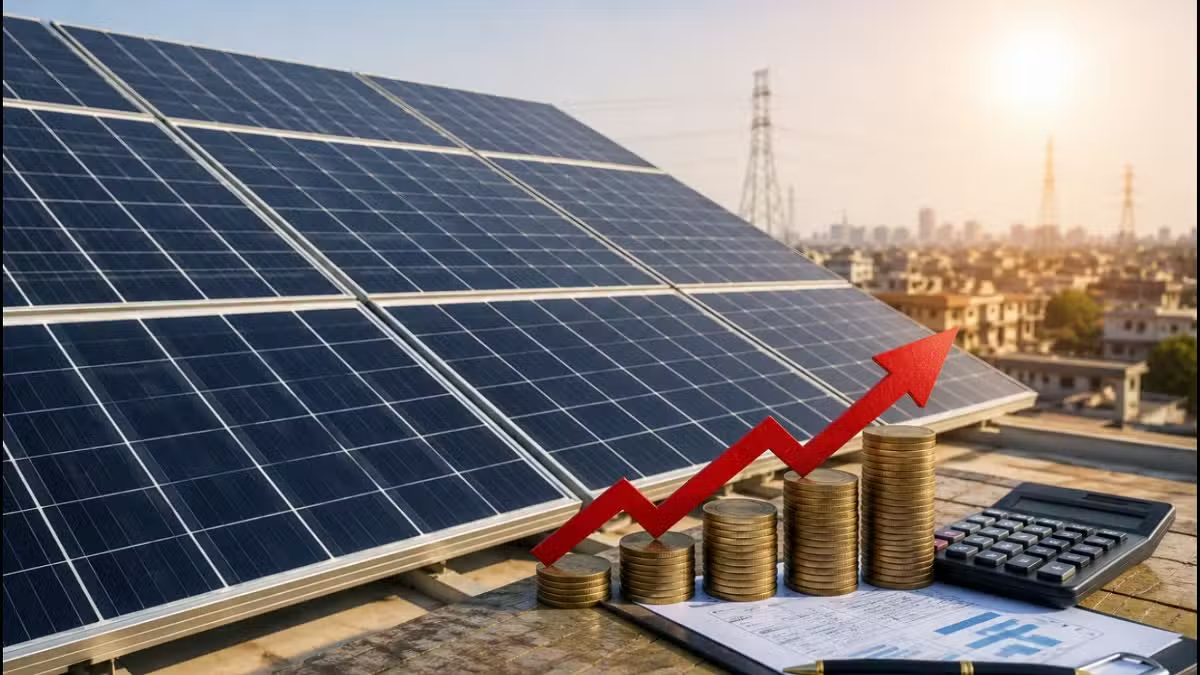
Solar panel prices in Pakistan have recorded a noticeable increase as the market reacts ahead of the upcoming federal budget, with traders and suppliers adjusting rates in anticipation of possible new tax measures. This price movement has already begun to affect consumers who were planning to invest in renewable energy solutions.
Market data indicates that the cost of different solar panel models has risen sharply, with an average increase ranging between Rs. 7,000 and Rs. 9,000 per panel. This sudden jump has added significant pressure on households and businesses that rely on solar installations to reduce electricity costs and improve long-term energy savings.
Industry observers suggest that the increase is largely driven by uncertainty surrounding upcoming fiscal policies. Even without an official announcement of new taxes, the solar market has reacted early, reflecting how sensitive the sector is to potential regulatory changes. Import costs, currency fluctuations, and supply chain adjustments have also contributed to the upward trend.
In recent years, solar energy adoption in Pakistan has grown rapidly due to rising electricity tariffs and frequent power shortages. Many consumers view solar systems as a practical alternative to grid dependency. However, rising equipment prices could slow down new installations, particularly for middle-income households and small businesses.
Energy experts believe that while short-term price fluctuations may create challenges, the long-term outlook for solar energy remains positive. Demand is expected to remain strong due to structural energy issues in the country and increasing awareness of renewable energy benefits. Government policy decisions in the upcoming budget will play a key role in determining whether prices stabilize or continue to rise.
For many consumers, the current situation creates a sense of urgency. Those planning to install solar systems are now reconsidering timelines in order to avoid further price hikes. Dealers across major cities are reporting increased inquiries, even as costs continue to climb.
As Pakistan continues to navigate energy shortages and rising electricity costs, solar power remains a critical part of the country’s energy future. However, market volatility highlights the need for clearer policy direction to support affordability and long-term investment in renewable infrastructure.
Author

webdesk@pakbuzztoday.com
Related Posts

PCB Expands School Cricket Programme to 1,400 Schools Across 100 Districts
The Pakistan Cricket Board (PCB) has significantly expanded its School Cricket Programme for the current season, with the competition now set to...

Islamabad’s Park Road Underpass Finally Opens for Traffic After Months of Delay
Islamabad’s Park Road underpass has finally been opened to traffic after months of delays, allowing motorists to use the newly constructed road...

Government Makes SMS Registration Free for Prime Minister’s Fuel Subsidy Scheme
The federal government has introduced a free SMS registration facility for the Prime Minister’s Fuel Subsidy Scheme, allowing eligible citizens to register...

FGEHA Generates Over Rs. 10 Billion From First Day of Islamabad Plot Auction
The Federal Government Employees Housing Authority (FGEHA) generated more than Rs. 10 billion through the sale of 15 commercial plots during the...
Emergency Alert Issued for Makkah, Jeddah and Taif Amid Yemen Strike Threat
Saudi Arabian authorities have issued emergency alerts for residents and visitors in Makkah, Jeddah and Taif amid growing security concerns following attacks...

Pakistan Confirms Participation in India-Hosted Asian Champions Trophy
Pakistan will participate in the upcoming Men’s Asian Champions Trophy hockey tournament in India, with the decision bringing the national team into...