
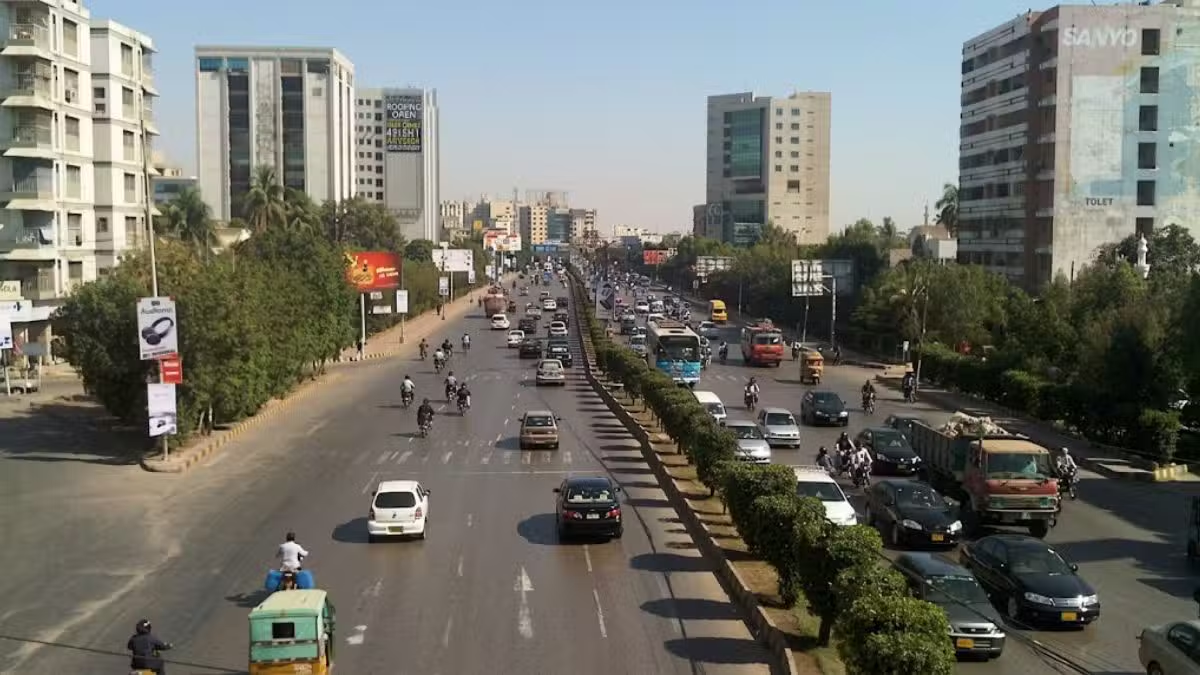
The Sindh Assembly’s Public Accounts Committee (PAC) has sought detailed records of road-cutting fees collected from utility companies in Karachi, raising questions over the use of funds intended to address damage caused by excavation.
The committee has asked for town-wise information showing how much money was collected from utility companies and how those funds were subsequently utilized.
The matter was discussed during a PAC meeting chaired by Nisar Khuhro, where members examined the financial details related to road-cutting charges across Karachi.
The committee’s demand for records comes amid concerns that several roads affected by excavation for utility work have not been properly restored.
Utility companies frequently carry out road cutting to install, repair or maintain underground infrastructure, including electricity, gas, water, telecommunications and other essential services.
Such work can leave roads damaged or difficult to use if excavated sections are not restored promptly. The condition of affected roads can also create problems for motorists, pedestrians and nearby businesses.
During the meeting, the PAC sought information on the amount collected by individual towns through road-cutting fees. Members also asked authorities to provide details about where the collected funds were spent.
The committee’s questions place the focus on both revenue collection and financial utilization. The requested records could help establish whether the funds collected from utility companies were being used for the intended purpose of repairing or restoring damaged roads.
Karachi’s extensive road network is regularly affected by infrastructure and utility projects. While road cutting can be necessary for maintaining essential services, proper restoration is important to prevent long-term deterioration of public infrastructure.
The PAC’s inquiry may also provide greater clarity about the responsibilities of local authorities and utility companies following excavation work.
If road-cutting charges are collected specifically to cover restoration costs, maintaining transparent records of those collections and expenditures can help authorities monitor whether the money is being used effectively.
The town-wise data requested by the committee is expected to show differences in the amounts collected across Karachi’s various administrative areas. It could also provide information about expenditure patterns and identify areas where road restoration remains incomplete.
The issue is particularly significant for Karachi residents, who frequently face traffic congestion and road maintenance problems. Damaged or partially restored roads can further complicate transportation, especially on busy routes.
The PAC’s request for financial records reflects a broader focus on accountability in the management of public funds and municipal infrastructure.
The committee will review the information once the relevant records are submitted. The findings could help determine how road-cutting fees have been collected and spent and whether additional measures are needed to ensure timely restoration of roads across Karachi.
Author

webdesk@pakbuzztoday.com
Related Posts
Sindh Records Pakistan’s Lowest Rainfall During 2026 Monsoon Season
Sindh experienced the lowest rainfall among Pakistan’s provinces during the 2026 monsoon season, with the province receiving significantly less rain than its...
Tax Lawyers Urge PM Shehbaz to Restrict FBR Enforcement Powers
The Multan Tax Bar Association (MTBA) has urged Prime Minister Shehbaz Sharif to review the enforcement powers of the Federal Board of...
IMF Raises Concerns Over Pakistan’s Low Agriculture Tax Collection
The International Monetary Fund (IMF) has raised concerns over Pakistan’s weak collection of agricultural income tax despite significant increases in tax rates...

Noor Zaman Secures Third Place at Asian Games 2026 Squash
Pakistan’s Noor Zaman secured third place in the men’s singles squash competition at the Asian Games 2026 after defeating compatriot Muhammad Ashab...
Islamabad Court Issues Bailable Arrest Warrants for CDA Chairman
An Islamabad civil court has issued bailable arrest warrants for the chairman of the Capital Development Authority (CDA) over the alleged failure...

Motorway Police Opens Driving License Facilitation Center in Sindh
The National Highways and Motorway Police (NHMP) has opened its first Driving Licensing Authority (DLA) Facilitation Center in Sindh, introducing technology-based driving...