
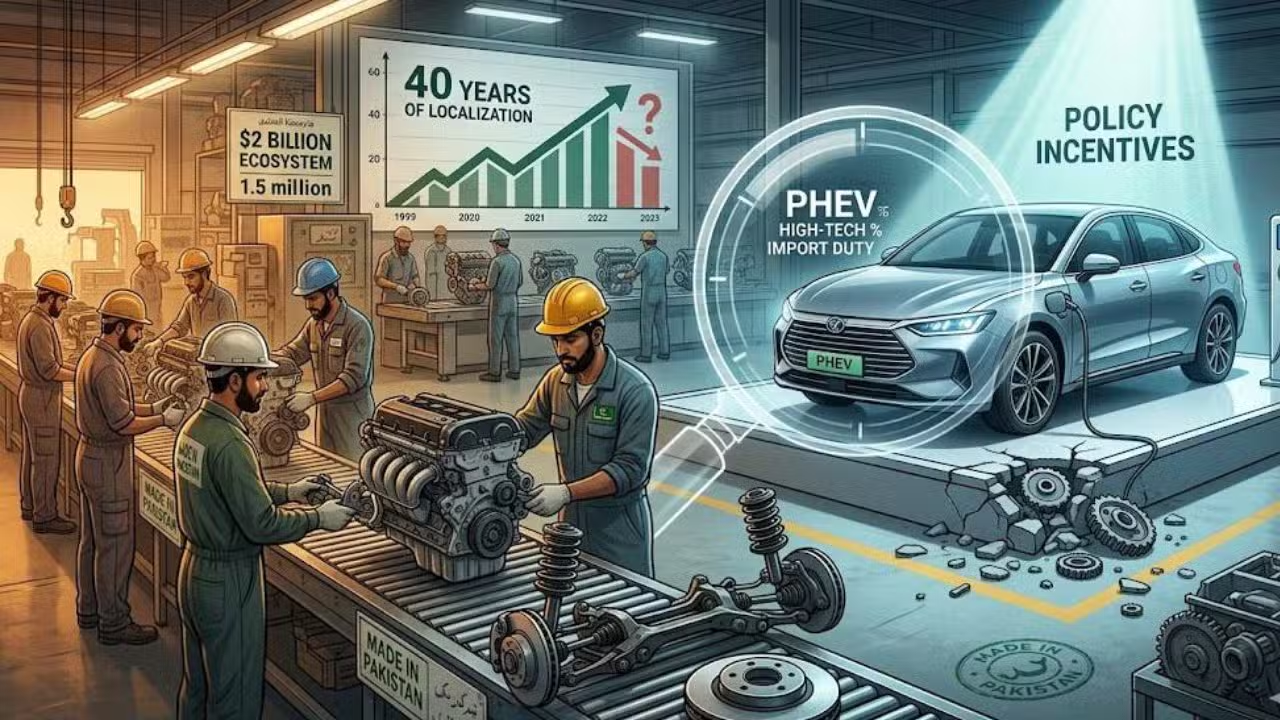
Pakistan’s upcoming auto policy is emerging as a defining moment for the country’s manufacturing sector, with industry stakeholders warning that excessive tariff relaxations on imported hybrid vehicles could threaten decades of industrial investment and localisation efforts.
In an opinion piece by Khawar Azhar, concerns were raised over proposed concessions for Plug-in Hybrid Electric Vehicles (PHEVs) and Range Extenders, which some industry experts believe could severely impact Pakistan’s domestic auto parts manufacturing ecosystem.
According to industry estimates, more than 1,200 auto parts manufacturers have collectively invested nearly $2 billion into Pakistan’s automotive sector over the last four decades. The localisation drive has enabled the sedan segment to achieve approximately 65 percent local content, with over 5,000 vehicle parts currently produced within the country.
These developments have not only reduced reliance on imports but have also created employment opportunities and supported nearly 1.5 million families linked to the auto manufacturing supply chain.
The debate intensified after reports suggested the government is considering major reductions in duties on PHEVs and Range Extender vehicles. Proposed changes could reportedly lower duties from nearly Rs. 1.5 million to just Rs. 100,000 per vehicle.
Industry representatives fear such concessions may weaken incentives for manufacturers to source components locally. Critics argue that if imported vehicles and parts become significantly cheaper without strict localisation requirements, domestic suppliers could face another major decline similar to what occurred after earlier tariff reductions introduced in 2016.
At that time, reduced import duties on Completely Knocked Down (CKD) kits and lower tariffs on localisable parts reportedly led to substantial business losses for local manufacturers. Industry stakeholders claim many greenfield projects introduced under previous policies failed to contribute meaningfully toward localisation targets.
The current concern is that Pakistan’s existing industrial base, which still heavily depends on conventional combustion engine vehicle components, could face further pressure if hybrid vehicle imports are prioritized without safeguards for local manufacturers.
Experts also point out that Plug-in Hybrid Electric Vehicles and Range Extenders are not fully zero-emission technologies. As a result, some stakeholders believe policy incentives should focus more aggressively on fully electric Battery Electric Vehicles (BEVs) instead of hybrid models that continue relying on conventional engine systems.
The Pakistan Association of Automotive Parts and Accessories Manufacturers (PAAPAM) has reportedly recommended maintaining a clear tariff difference between localised and non-localised parts. Industry representatives believe a balanced policy can encourage cleaner mobility solutions without undermining Pakistan’s domestic manufacturing capabilities.
The upcoming auto policy is expected to play a major role in shaping the future of Pakistan’s industrial and transportation sectors over the next decade. Policymakers now face the challenge of balancing economic growth, environmental goals, investor confidence, and the protection of local industry.
With billions of dollars already invested and millions of livelihoods connected to the sector, industry leaders are urging the government to adopt reforms that support innovation while preserving Pakistan’s manufacturing foundation.
Author

webdesk@pakbuzztoday.com
Related Posts
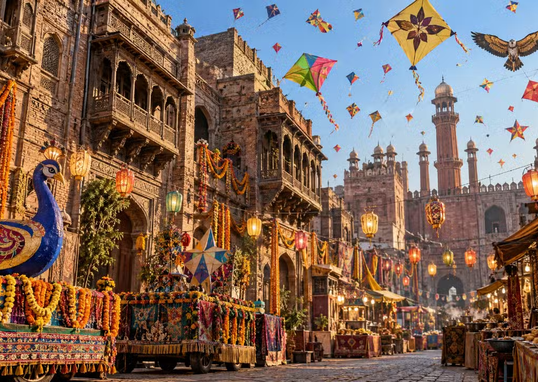
Lahore Set for Major Beautification Ahead of Basant 2027
Lahore is set to undergo a major beautification drive ahead of the planned Basant Festival 2027, with authorities preparing a cultural and...

Pakistani Wrestling Star Inam Butt Withdraws From Asian Games 2026
Renowned Pakistani wrestler Inam Butt has withdrawn from the upcoming Asian Games 2026 in Japan following a positive doping test, according to...
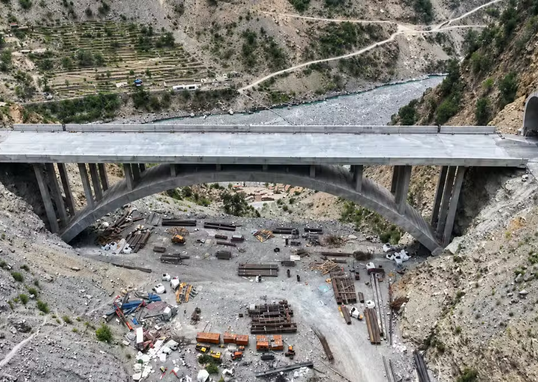
First Arch Bridge Completed on Alternative Karakoram Highway Route
A major infrastructure milestone has been achieved along the Karakoram Highway, with the first arch bridge completed on the alternative 52-kilometre route...
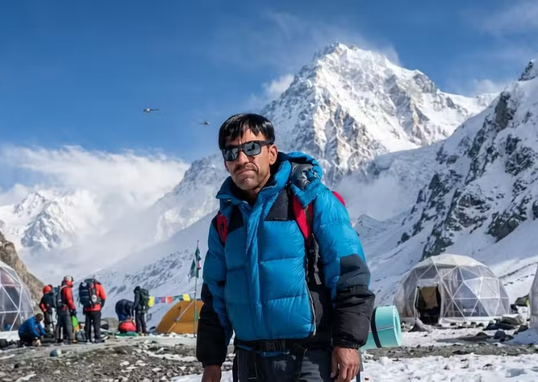
Mountaineer Syed Ali Shah’s Body Recovered From Falak Sar After 54 Days
The body of Pakistani mountaineer Syed Ali Shah has been recovered from Falak Sar Peak in Kalam Valley, 54 days after he...
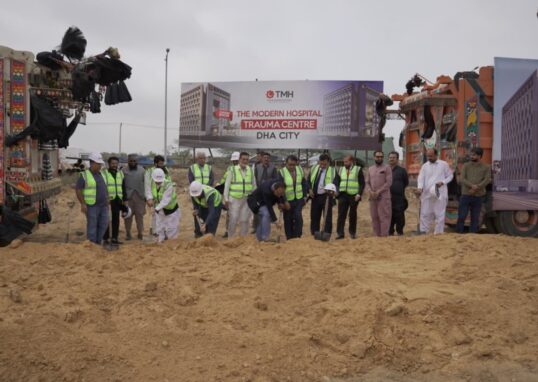
The Modern Hospital Group Holds Groundbreaking Ceremony for Trauma Centre in DHA City Karachi
KARACHI: The Modern Hospital Group continues to expand its network of healthcare projects across Sindh. Following ongoing initiatives in Hyderabad, Gharo, Islamkot,...
Read out all
Lahore Adds Five New Padel Courts to Expand Opportunities in Emerging Sports
Lahore has added five newly constructed padel tennis courts as Punjab steps up efforts to promote emerging sports and provide athletes with...