
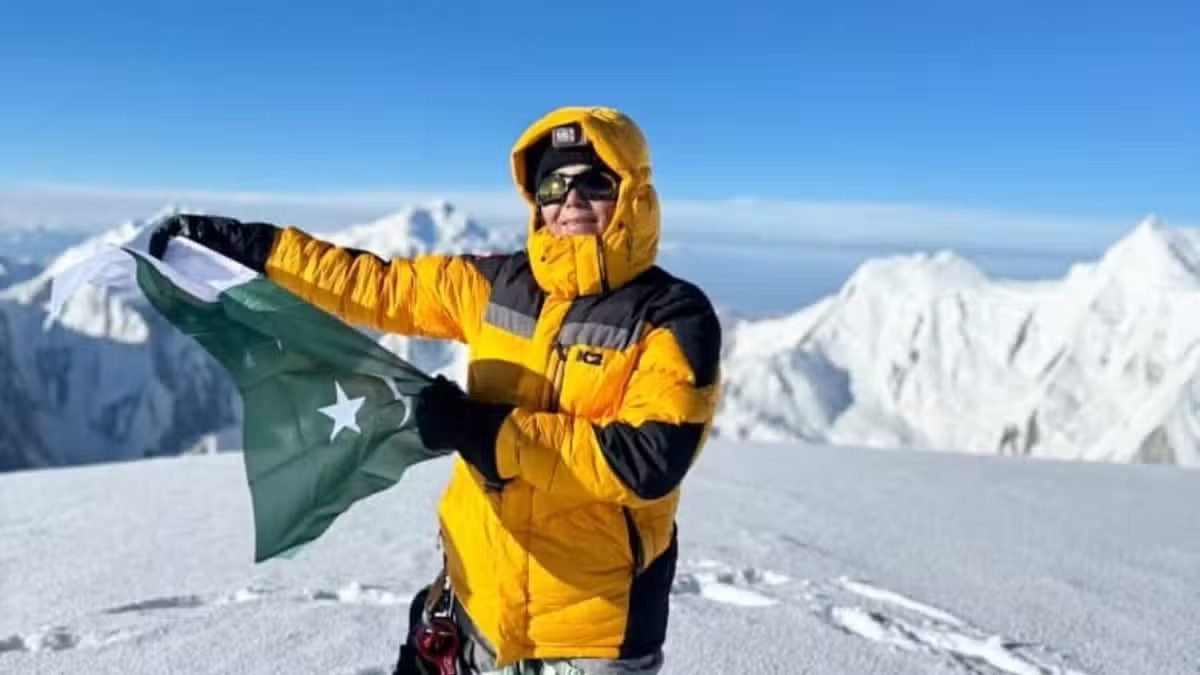
Four women mountaineers from Gilgit-Baltistan have successfully reached the summit of Spantik Peak, climbing to an altitude of 7,027 metres without support from high-altitude porters.
The achievement was confirmed by the Alpine Club of Pakistan, which reported that the climbers successfully completed the expedition and safely returned to Skardu.
The mountaineering team included Shama Baqir, Samana Rahim, Zooni Aslam and Zaiba Batool Shigri. Their successful ascent marks a notable achievement for women climbers from Gilgit-Baltistan and Pakistan’s mountaineering community.
Located in Gilgit-Baltistan, Spantik Peak is one of Pakistan’s prominent high-altitude mountains and is known for challenging climbing conditions. Reaching an elevation of 7,027 metres requires considerable physical endurance, technical preparation and careful planning.
Completing the climb without high-altitude porter support makes the expedition particularly significant. High-altitude porters often play an important role in mountaineering expeditions by carrying equipment and supplies in demanding mountain environments.
The four climbers managed the ascent independently of such high-altitude support, demonstrating their ability to operate in challenging conditions at extreme elevations.
After reaching the summit, Shama Baqir, Samana Rahim, Zooni Aslam and Zaiba Batool Shigri safely completed their descent and returned to Skardu.
Their achievement has brought fresh attention to the growing participation of women in mountaineering in Gilgit-Baltistan. The region is home to some of the world’s most spectacular mountain landscapes and attracts climbers from Pakistan and around the world.
Gilgit-Baltistan has long been associated with mountaineering and adventure tourism because of its high peaks, glaciers and demanding climbing routes. Successful local expeditions can also help highlight the region’s potential as a destination for adventure sports.
For Pakistani women interested in mountaineering, achievements such as this can provide an example of what is possible with proper training, preparation and determination.
The successful ascent also adds to Pakistan’s record of notable mountaineering accomplishments. The country is home to some of the world’s highest peaks, including K2, Nanga Parbat and other major mountains that attract experienced climbers.
Spantik, sometimes known as the Golden Peak, is among the major climbing destinations in Gilgit-Baltistan. Its 7,027-metre elevation places it firmly among Pakistan’s significant high-altitude peaks.
The expedition by the four women climbers demonstrates the demanding nature of high-altitude mountaineering while highlighting the capabilities of local athletes from the region.
Their safe return to Skardu following the summit is equally important, as descending from high elevations can present serious challenges even after a successful summit.
The achievement of Shama Baqir, Samana Rahim, Zooni Aslam and Zaiba Batool Shigri is therefore being viewed as an important moment for women’s mountaineering in Gilgit-Baltistan and Pakistan.
Their Spantik Peak summit could further encourage interest in mountaineering among young people in the region and contribute to the growing visibility of Pakistani women in adventure sports.