
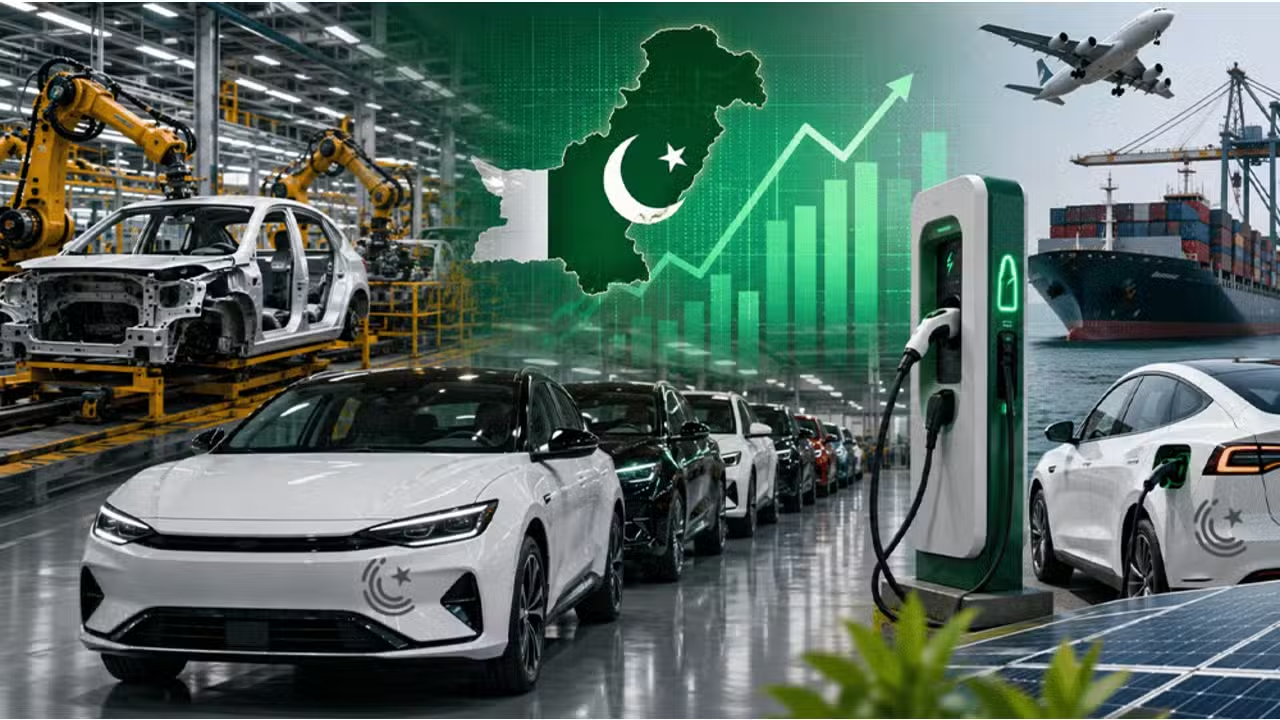
Pakistan’s planned transition towards electric vehicles (EVs) and new energy vehicles (NEVs) is facing potential challenges as some industry players reportedly seek changes to the proposed Auto Policy 2026–31. The pressure is reportedly being directed towards the Federal Board of Revenue (FBR) and the International Monetary Fund (IMF), raising concerns about the future of incentives designed to support electric mobility in the country.
According to sources familiar with the matter, certain industry stakeholders are attempting to influence the policy framework by advocating higher sales taxes on new energy vehicles. Such changes could affect the financial incentives intended to encourage consumers and businesses to adopt electric transportation.
The proposed Auto Policy 2026–31 is expected to play an important role in shaping Pakistan’s automotive industry over the coming years. Its broader objectives include supporting modern vehicle technologies, encouraging investment, and facilitating the transition towards cleaner transportation alternatives.
However, reported efforts to increase the tax burden on NEVs could create uncertainty for manufacturers, investors, and potential buyers. Higher sales taxes may increase vehicle prices, potentially making electric cars and other new energy vehicles less affordable for ordinary consumers.
Electric mobility has gained attention in Pakistan as policymakers explore ways to reduce dependence on imported petroleum products and improve environmental conditions. Electric vehicles can offer lower running costs compared with conventional fuel-powered vehicles, although their affordability and practicality depend on several factors, including battery prices, charging infrastructure, and electricity costs.
The reported pressure surrounding the new policy also highlights the competing interests within Pakistan’s automotive sector. Traditional vehicle manufacturers, emerging electric vehicle companies, importers, and other industry stakeholders may have different expectations regarding taxation, incentives, and market regulations.
For companies investing in electric vehicle production and distribution, a stable policy environment is particularly important. Businesses generally require predictable tax structures and long-term incentives before committing substantial resources to manufacturing facilities, technology, and supply chains.
The proposed sales tax changes could also influence consumer confidence. Financial incentives are often used by governments to make new technologies more accessible during the early stages of market development. If these incentives are reduced or weakened, the adoption of electric vehicles could face additional obstacles.
Pakistan’s transition to new energy vehicles also involves challenges beyond taxation. The availability of charging stations, battery maintenance facilities, reliable electricity supplies, and affordable financing will all influence how quickly consumers move towards electric transportation.
At the same time, policymakers must consider government revenue requirements, industrial competitiveness, and the need to create a sustainable automotive ecosystem. Balancing these priorities will be important when finalising the Auto Policy 2026–31.
The reported campaign to increase sales taxes has therefore brought renewed attention to the direction of Pakistan’s electric vehicle strategy. Any significant changes to the proposed incentives could affect investment decisions and the country’s efforts to develop its NEV market.
As discussions surrounding the policy continue, manufacturers, investors, and consumers will be watching developments involving the FBR, the IMF, and relevant government authorities. The final policy framework will be important in determining the future pace of electric vehicle adoption and Pakistan’s broader transition towards cleaner mobility.