
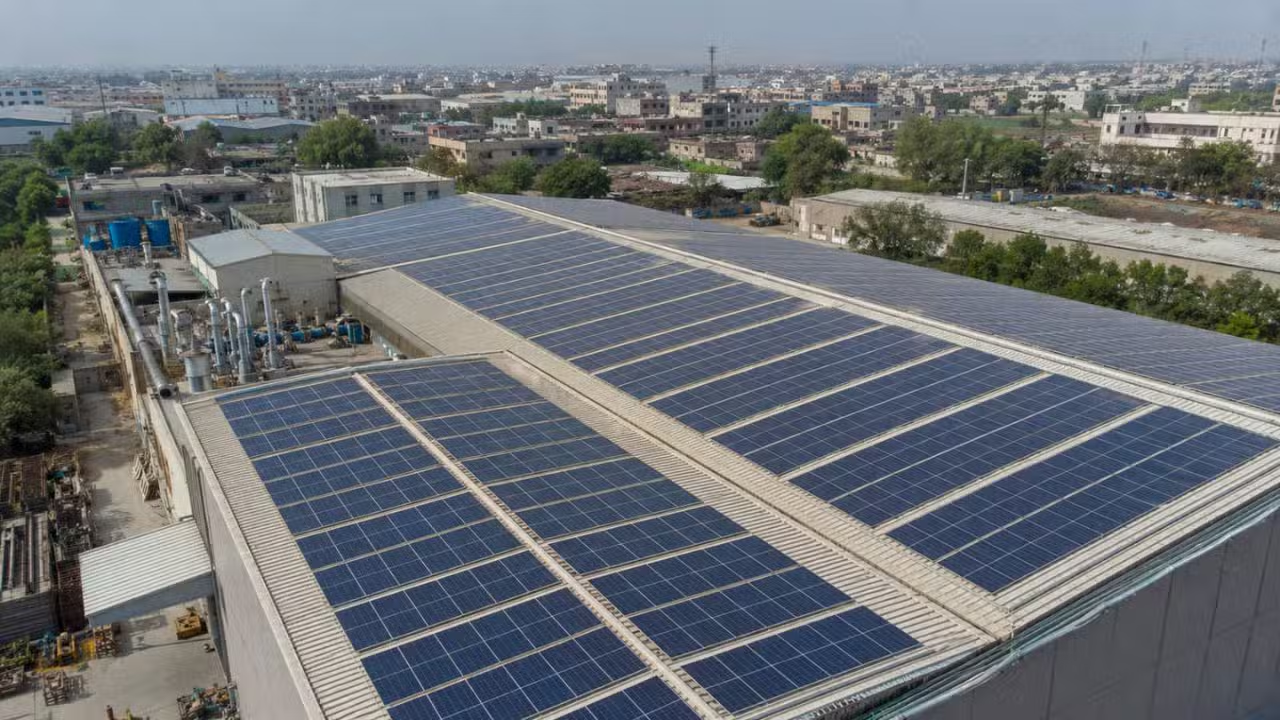
The federal government has directed authorities in Gilgit-Baltistan to accelerate work on major energy and infrastructure projects, including a Rs24.9 billion initiative designed to develop 100 megawatts of distributed solar power in the region.
Federal Minister for Planning, Development and Special Initiatives Professor Ahsan Iqbal issued the instructions during the second meeting of the Prime Minister’s Committee on development concerns of Gilgit-Baltistan.
The minister called for the solar power, transmission infrastructure and access-road components of the project to progress at the same time. He stressed that delays in one part of the initiative should not hold back the remaining components.
The 100MW Distributed Solar Photovoltaic project is designed to expand renewable energy capacity in Gilgit-Baltistan. According to the briefing, the initiative includes both rooftop solar installations and larger utility-scale solar facilities.
Transmission infrastructure is also included in the project to support the delivery of electricity generated through the planned solar installations. Access roads form another important component, particularly for reaching project sites and supporting construction and maintenance activities.
Ahsan Iqbal directed the Gilgit-Baltistan government to immediately begin work on the access roads and transmission infrastructure that fall within its assigned responsibilities.
The instructions are intended to ensure that supporting infrastructure is ready alongside the development of solar generation capacity. Coordinated implementation could help prevent situations where completed energy facilities remain underutilized because related infrastructure is unfinished.
The project is particularly significant for Gilgit-Baltistan, where geographical conditions and difficult terrain can make the development of conventional energy and transportation infrastructure challenging.
Expanding solar power could provide the region with additional renewable energy capacity while reducing reliance on conventional sources. The combination of rooftop and utility-scale installations also allows the project to address energy needs through different forms of solar generation.
The development of transmission lines will be essential for connecting new generation facilities to the electricity network. Similarly, access roads can improve logistical connectivity to project locations and facilitate the movement of equipment and construction materials.
The Prime Minister’s Committee meeting also focused on broader development concerns facing Gilgit-Baltistan. The latest directives indicate an emphasis on accelerating projects that can strengthen energy infrastructure and improve connectivity in the region.
With an estimated cost of Rs24.9 billion, the distributed solar project represents a major public investment in Gilgit-Baltistan’s renewable energy sector. Its implementation will require coordination between federal authorities and the regional government.
The government’s decision to move the solar, transmission and road components forward simultaneously could help maintain the overall project timeline. Authorities will now be expected to begin work on the components assigned to them and maintain coordination during implementation.
The 100MW initiative could become an important part of Gilgit-Baltistan’s future energy infrastructure if construction and supporting facilities are completed as planned. Faster implementation may also help the region expand its use of renewable energy while improving access to remote project areas.