
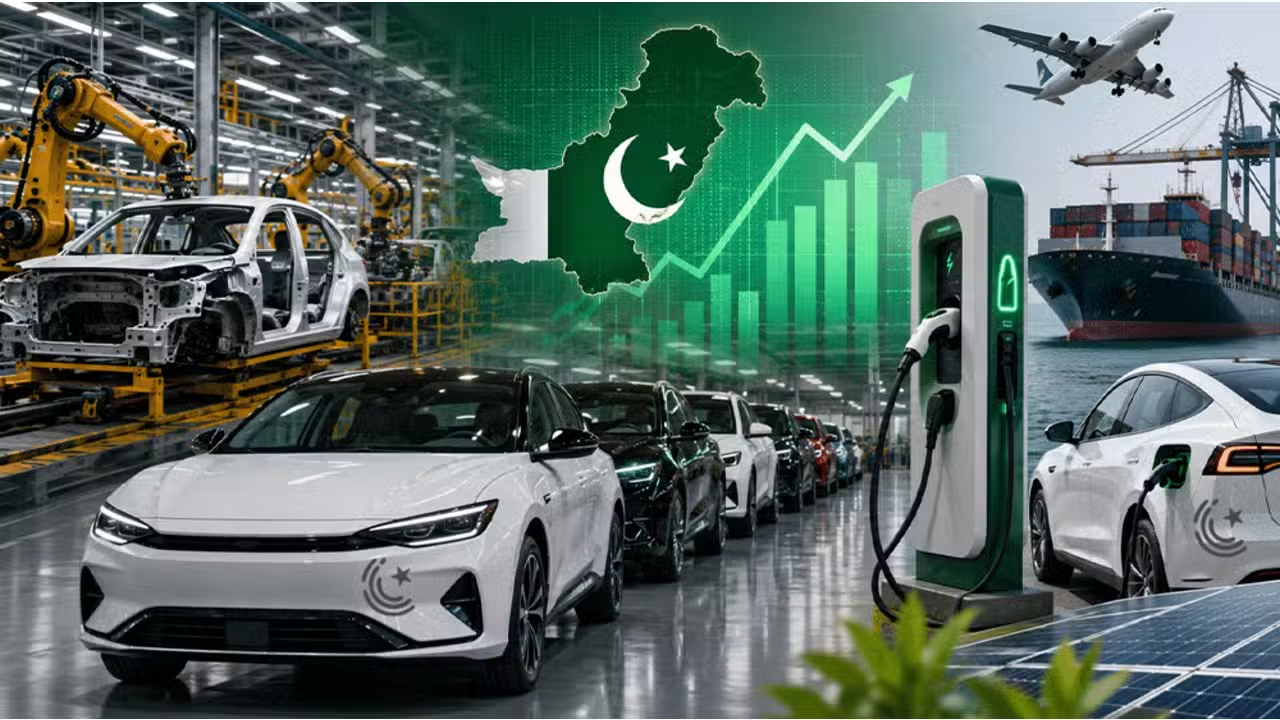
The federal government is expected to introduce Pakistan’s new Auto Policy in August, with a strong focus on promoting electric vehicles (EVs), hybrid cars, and increased investment in the country’s automotive industry. The proposed framework is aimed at attracting both local and foreign investors while encouraging the expansion of domestic vehicle manufacturing.
According to sources, Prime Minister Shehbaz Sharif has directed relevant authorities to finalize an investor-friendly policy that supports long-term growth in the automotive sector. The initiative is expected to create new employment opportunities, strengthen industrial development, and improve Pakistan’s manufacturing capabilities.
One of the key objectives of the upcoming Auto Policy is to accelerate the adoption of electric and hybrid vehicles. As global demand for cleaner transportation continues to grow, Pakistan is also looking to encourage environmentally friendly mobility solutions while reducing dependence on conventional fuel-powered vehicles.
The policy is expected to provide a more attractive environment for automotive manufacturers by introducing measures that encourage investment and technological innovation. Industry stakeholders anticipate that the new framework will support greater competition, expand production capacity, and facilitate the introduction of modern vehicle technologies.
Another major feature of the policy will be the implementation of international safety standards for locally manufactured vehicles. Aligning Pakistan’s automotive regulations with global benchmarks is expected to improve vehicle quality, enhance consumer safety, and increase the competitiveness of locally assembled automobiles.
Experts believe that adopting internationally recognized safety requirements could also help Pakistani manufacturers prepare for future export opportunities. Improved production standards may strengthen consumer confidence while encouraging greater investment in research, development, and advanced manufacturing processes.
The automotive sector remains an important contributor to Pakistan’s economy, supporting thousands of jobs across manufacturing, parts production, sales, and after-sales services. A modernized Auto Policy could further stimulate economic activity by attracting new investment and encouraging the localization of vehicle components.
The expected emphasis on electric and hybrid vehicles also aligns with global efforts to reduce carbon emissions and promote sustainable transportation. Increased adoption of cleaner vehicle technologies could help lower fuel consumption, reduce environmental pollution, and diversify Pakistan’s transportation sector over the coming years.
As the government prepares to unveil the new Auto Policy in August, industry participants and consumers will be closely watching for details regarding incentives, investment opportunities, local manufacturing targets, and regulations that could shape the future of Pakistan’s automotive industry.
Author

webdesk@pakbuzztoday.com
Related Posts
BankIslami Named Pakistan’s Best Islamic Digital Bank at Euromoney Awards
BankIslami has been recognised as Pakistan’s Best Islamic Digital Bank by Euromoney, one of the world’s leading authorities on financial services excellence....
Punjab Revises Land Record Service Fees Across the Province
The Punjab government has officially revised the fee structure for a range of land record services, with the updated charges coming into...

KP Government Unveils Rs206 Billion Development Package for Hazara Division
The Khyber Pakhtunkhwa (KP) government has announced a comprehensive development package worth more than Rs206 billion for Hazara Division under the Khushhal...
Read out all
Usman Khan and Sufiyan Muqeem Join Perth Scorchers XI for Global Super League 2026
Pakistani cricketers Usman Khan and Sufiyan Muqeem are set to feature for the Perth Scorchers XI in the upcoming Global Super League,...
KP Government Strengthens Security at Minority Places of Worship
The Khyber Pakhtunkhwa Auqaf, Hajj, Religious and Minority Affairs Department has announced enhanced security measures for minority places of worship across the...
Airblue becomes Pakistan’s first fully cashless airline with nationwide digital payments
Airblue has officially become Pakistan’s first fully cashless airline, completing the transition to digital payments across all of its sales offices nationwide....