
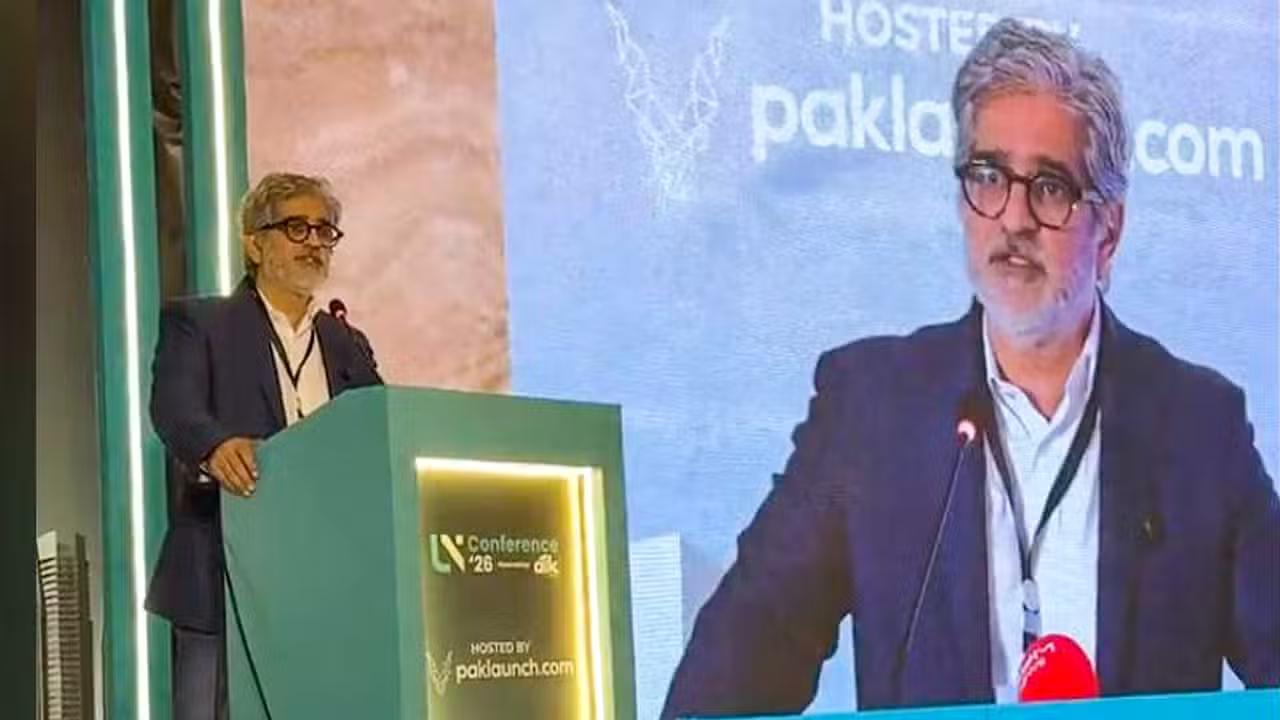
Pakistan’s digital economy is entering a decisive phase, moving from untapped potential to real execution, as highlighted by JazzWorld at the Paklaunch UNConference 2026. The event brought together key players from across the global tech ecosystem, reinforcing growing international confidence in Pakistan’s digital future.
Over two days, founders, investors, policymakers, and operators explored the country’s evolving startup landscape. Discussions focused on high-impact areas such as artificial intelligence, fintech, digital platforms, and emerging technologies, all of which are shaping the next wave of innovation.
In his keynote remarks, Aamir Ibrahim pointed to increasing global engagement with Pakistan. He noted that international investors are showing renewed interest, creating an opening for the country to secure funding not only for infrastructure but also for scalable digital solutions built on top of it.
He stressed that while connectivity has improved significantly, with over 200 million people now within digital reach, access alone is no longer enough. The real challenge lies in translating this connectivity into meaningful usage and measurable economic outcomes. According to him, Pakistan must reposition itself from being seen as a land of opportunity to becoming a land of execution.
This shift is already taking shape across multiple sectors. Traditional industries are undergoing digital transformation, with finance evolving into fintech, education into edtech, and agriculture into agritech. These changes are being driven by scalable platforms designed to enhance efficiency and accessibility.
On the second day of the conference, Ali Fahd highlighted JazzWorld’s transition into a fully integrated Digital ServiceCo under its DO1440 strategy. He explained that the company is building a diverse ecosystem that spans entertainment, healthcare, insurance, and lifestyle services, aiming to provide inclusive digital solutions to a broader population.
A key focus of this approach is leveraging customer insights to address structural challenges. Fahd pointed to healthcare access as a major gap, particularly for women. Through platforms like ApnaClinic, JazzWorld is enabling remote and affordable healthcare services, helping underserved communities overcome barriers related to mobility and cost.
The broader takeaway from the conference was clear: Pakistan’s digital growth will not be defined solely by ambition or infrastructure. Sustained execution, innovation, and the ability to deliver tangible impact at scale will determine the country’s success in the global digital economy.
Author

webdesk@pakbuzztoday.com
Related Posts

Fatima Gobi Ventures’ Early Bet on Fasset Pays Off as Fintech Reaches US$1 Billion Valuation
Fatima Gobi Ventures (FGV) has reached a major milestone in Pakistan’s venture capital landscape after its early investment in Fasset helped back...
Read out all
GB Announces Trophy Hunting Permit Rates for 2026-27 Auction
The Gilgit-Baltistan Parks and Wildlife Department has announced the base rates and auction schedule for trophy hunting permits under the GB Trophy...

Four Women From Gilgit-Baltistan Summit 7,027-Metre Spantik Peak Without High-Altitude Porters
Four women mountaineers from Gilgit-Baltistan have successfully reached the summit of Spantik Peak, climbing to an altitude of 7,027 metres without support...

Pakistan to Host 14th South Asian Games From April 3 to 11 Next Year
Pakistan is set to host the 14th South Asian Games from April 3 to 11 next year after the South Asia Olympic...

Pakistan Sets Multiple Unwanted Test Records After Heavy Defeat Against England
Pakistan suffered a disappointing start to its three-match away Test series against England, losing the opening match at Headingley by an innings...

Crypto Companies Can Now Apply for Licenses in Pakistan
Pakistan has formally opened its virtual asset licensing regime, allowing cryptocurrency and other virtual asset companies to seek regulatory approval under the...