
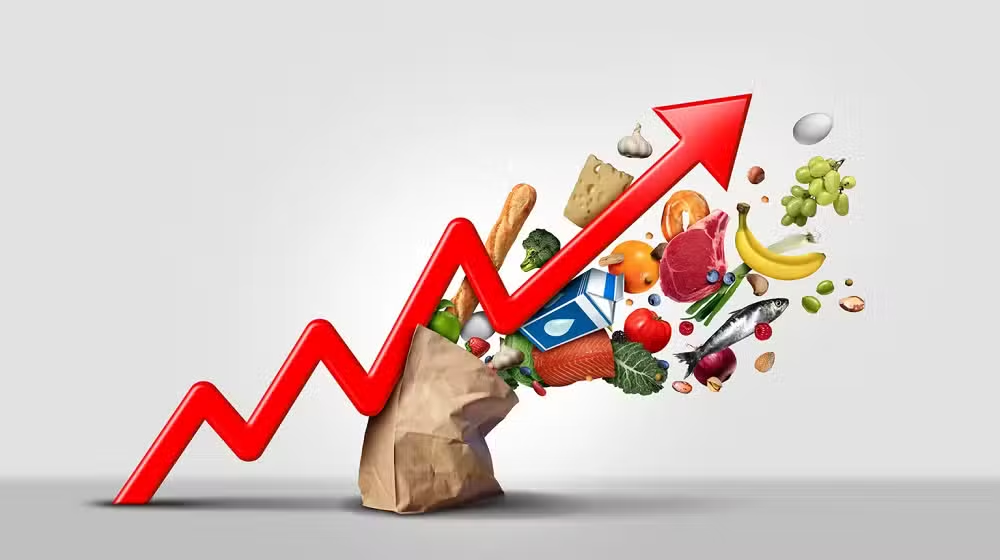
Pakistan’s annual inflation rate rose to 7 percent year-on-year (YoY) in February 2026, marking its highest level since October 2024, according to fresh data released by the Pakistan Bureau of Statistics (PBS).
The latest reading shows a noticeable acceleration compared to 5.8 percent in January 2026 and 1.5 percent in February 2025, highlighting renewed price pressures in the economy.
Month-on-Month Inflation Also Edges Up
On a month-on-month (MoM) basis, inflation increased by 0.3 percent in February 2026, compared to a 0.2 percent rise in January. In contrast, February 2025 had recorded a 0.7 percent decline, indicating that price momentum has picked up significantly over the past year.
Market analysts at Arif Habib Limited noted that this marks the highest inflation reading since October 2024, signaling a potential shift in the inflationary trend after months of relative stability.
What’s Driving the Increase?
While detailed breakdowns are still being analyzed, economists suggest that rising food prices, energy adjustments, and exchange rate pressures may have contributed to the uptick.
Key contributing factors may include:
- Higher fuel and electricity costs
- Volatility in global commodity markets
- Seasonal food price fluctuations
- Ongoing fiscal and structural adjustments
Inflation trends remain closely tied to Pakistan’s broader economic reform program and global price movements.
Implications for Monetary Policy
The rise in inflation could influence future decisions by the State Bank of Pakistan regarding interest rates. Policymakers typically monitor inflation closely when determining whether to maintain, increase, or reduce policy rates.
A sustained upward trend may limit room for aggressive monetary easing, especially if external pressures persist.
Economic Outlook
The February reading suggests that inflationary pressures are gradually building after reaching lower levels in early 2025. Analysts say upcoming months will be critical in determining whether this is a temporary spike or the beginning of a more sustained rise.
With global uncertainties, energy market fluctuations, and domestic reforms underway, inflation is expected to remain a key economic indicator for policymakers and investors alike.
Author

webdesk@pakbuzztoday.com
Related Posts

Fatima Gobi Ventures’ Early Bet on Fasset Pays Off as Fintech Reaches US$1 Billion Valuation
Fatima Gobi Ventures (FGV) has reached a major milestone in Pakistan’s venture capital landscape after its early investment in Fasset helped back...
Read out all
GB Announces Trophy Hunting Permit Rates for 2026-27 Auction
The Gilgit-Baltistan Parks and Wildlife Department has announced the base rates and auction schedule for trophy hunting permits under the GB Trophy...

Four Women From Gilgit-Baltistan Summit 7,027-Metre Spantik Peak Without High-Altitude Porters
Four women mountaineers from Gilgit-Baltistan have successfully reached the summit of Spantik Peak, climbing to an altitude of 7,027 metres without support...

Pakistan to Host 14th South Asian Games From April 3 to 11 Next Year
Pakistan is set to host the 14th South Asian Games from April 3 to 11 next year after the South Asia Olympic...

Pakistan Sets Multiple Unwanted Test Records After Heavy Defeat Against England
Pakistan suffered a disappointing start to its three-match away Test series against England, losing the opening match at Headingley by an innings...
Crypto Companies Can Now Apply for Licenses in Pakistan
Pakistan has formally opened its virtual asset licensing regime, allowing cryptocurrency and other virtual asset companies to seek regulatory approval under the...