
Pakistan is preparing to re-enter the global bond market after a four-year absence, as the government points to improving macroeconomic indicators and renewed investor confidence following a period of financial stress.
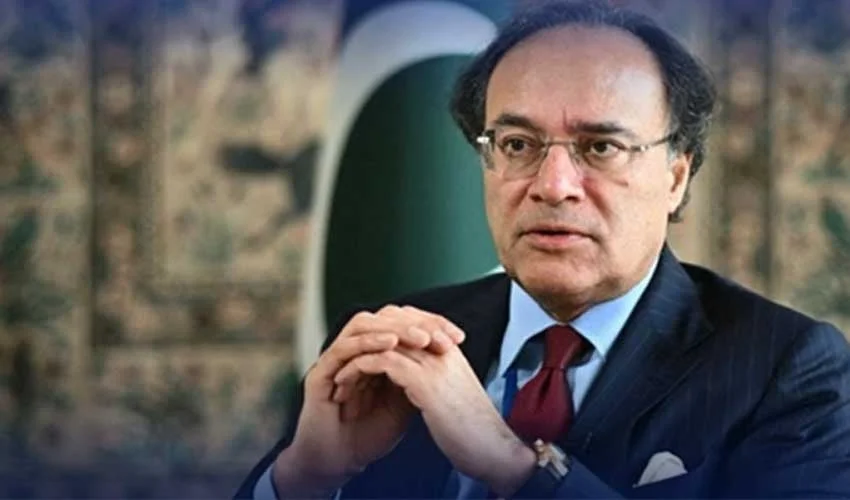
Finance Minister Muhammad Aurangzeb said on Tuesday that Pakistan is laying the groundwork for an international bond issuance, signaling a major step toward normalising access to global capital markets. Speaking to Bloomberg on the sidelines of the World Economic Forum (WEF) Annual Meeting 2026 in Davos, the finance minister said a proposal seeking advisers will be issued in the coming weeks.
Aurangzeb said the government is currently evaluating whether to issue a dollar-denominated bond, a euro bond, or an Islamic sukuk. In parallel, Pakistan is also preparing to launch its first-ever panda bond, which would be issued in China’s onshore market, within the next few weeks.
According to the finance minister, Pakistan has consolidated gains across key macroeconomic indicators after implementing tough but necessary reforms. He noted that inflation, interest rates, the fiscal balance and the current account position have all shown a clear improvement in recent months.
“If you look at every key indicator — inflation, interest rates, the fiscal position and the current account — the direction of travel has clearly improved,” Aurangzeb told Bloomberg.
Pakistan had effectively been shut out of international bond markets since 2022 as rising inflation, dwindling foreign-exchange reserves and political uncertainty rattled investor confidence. Stability has gradually returned following a series of International Monetary Fund (IMF) bailout programmes that required strict fiscal discipline and structural adjustments.
Inflation, which once surged to nearly 40 percent, has now eased to single-digit levels. At the same time, major global credit rating agencies, including Moody’s, S&P and Fitch, have upgraded Pakistan’s sovereign ratings, reflecting an improved outlook.
Aurangzeb said foreign-exchange reserves are expected to reach the equivalent of three months of import cover by the end of the current fiscal year in June, a level widely viewed as a key global benchmark. He added that there is currently no immediate pressure on the rupee, underscoring growing confidence in the country’s external position.
The finance minister also highlighted progress on long-delayed structural reforms. These include the privatisation of state-owned enterprises and efforts to broaden the tax base. Following the successful privatisation of Pakistan International Airlines last month, the government is now seeking to sell a stake in the Roosevelt Hotel in New York.
Looking ahead, Aurangzeb said Pakistan aims to shift toward export-led growth to avoid the import-driven expansions that have repeatedly triggered balance-of-payments crises in the past.
“We have to stay the course on reforms,” he said. “That’s the only way to move toward sustainable growth.”
Author

webdesk@pakbuzztoday.com
Related Posts

South Air to Launch Domestic Flights Connecting Karachi, Bahawalpur, and Islamabad
South Air has announced the launch of its domestic flight operations in Pakistan, with its inaugural scheduled services set to begin on...

Pakistan to Unveil New Auto Policy in August with Focus on EVs and Hybrid Cars
The federal government is expected to introduce Pakistan’s new Auto Policy in August, with a strong focus on promoting electric vehicles (EVs),...

BankIslami Named Pakistan’s Best Islamic Digital Bank at Euromoney Awards
BankIslami has been recognised as Pakistan’s Best Islamic Digital Bank by Euromoney, one of the world’s leading authorities on financial services excellence....

Punjab Revises Land Record Service Fees Across the Province
The Punjab government has officially revised the fee structure for a range of land record services, with the updated charges coming into...

KP Government Unveils Rs206 Billion Development Package for Hazara Division
The Khyber Pakhtunkhwa (KP) government has announced a comprehensive development package worth more than Rs206 billion for Hazara Division under the Khushhal...
Read out all
Usman Khan and Sufiyan Muqeem Join Perth Scorchers XI for Global Super League 2026
Pakistani cricketers Usman Khan and Sufiyan Muqeem are set to feature for the Perth Scorchers XI in the upcoming Global Super League,...