
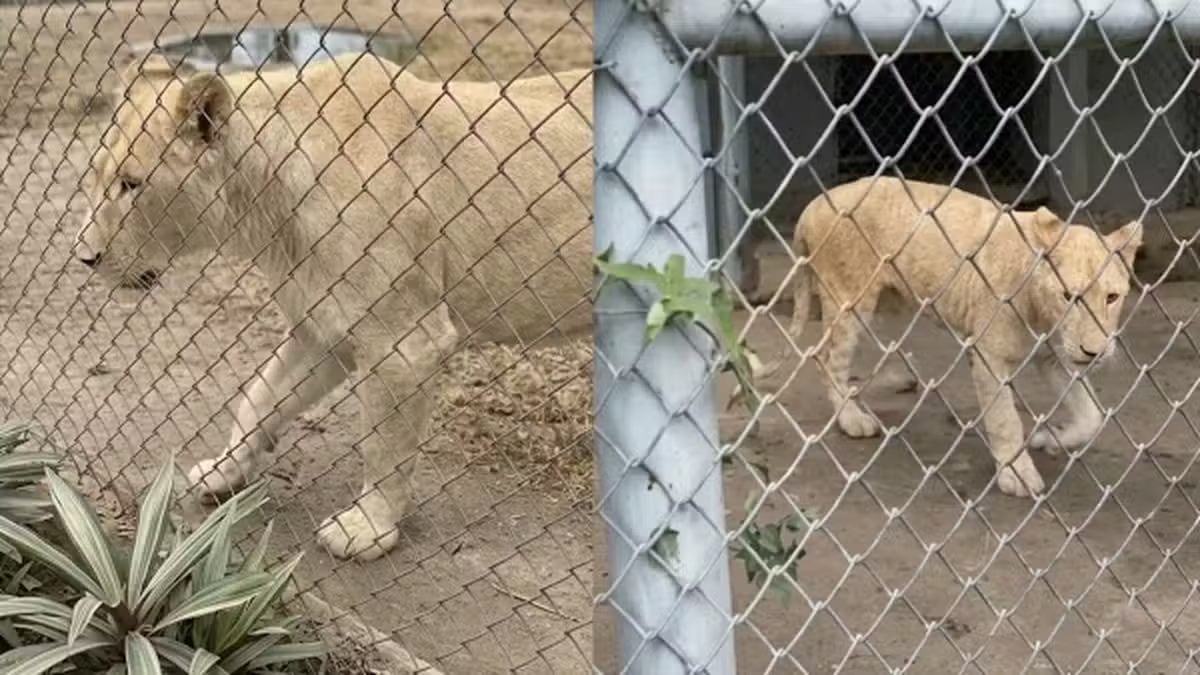
Three rare white lion cubs at Peshawar Zoo have developed concerning health problems, with all three reportedly experiencing difficulty walking. Their condition has raised questions about their physical development and the possibility of an underlying genetic disorder.
The situation has drawn attention from the Khyber Pakhtunkhwa government, which has taken notice of the matter and requested a report from the zoo administration. Authorities are seeking information about the cubs’ health, their treatment and the possible reasons behind their mobility problems.
The three cubs are considered rare because white lions are an uncommon genetic variation of African lions. Their distinctive appearance, particularly their pale coats, makes them different from the more commonly seen golden-coloured lions.
The reported difficulty in walking has become a concern because mobility problems in young animals can affect their overall development and quality of life. Veterinary specialists may need to conduct detailed examinations to determine whether the condition is linked to genetic factors, developmental abnormalities or other medical issues.
White lions are not a separate species of lion. Their white or cream-coloured coats are generally associated with a recessive genetic trait known as leucism, which reduces pigmentation in the fur while typically allowing the animals to retain their eye colour.
Although their unusual appearance attracts considerable public interest, white lions can face health challenges like other captive or wild animals. Any suspected medical condition requires proper veterinary assessment rather than assumptions based solely on their coat colour.
The possibility of a genetic disorder has become one of the concerns surrounding the Peshawar Zoo cubs. However, the exact cause of their walking difficulties has not been established, and further medical investigations would be necessary before reaching a conclusion.
The provincial government’s decision to seek a report indicates that the matter has received official attention. The zoo administration is expected to provide relevant details about the cubs’ condition and the measures being taken to address their health concerns.
Veterinary care is particularly important during the early stages of a lion’s life, as young cubs require proper nutrition, regular health monitoring and suitable living conditions. Early identification of medical problems can help specialists determine appropriate treatment and support their physical development.
The case also highlights the importance of animal welfare and veterinary facilities at zoological parks. Zoos that house rare wildlife have a responsibility to ensure regular medical examinations, appropriate nutrition and specialised care for animals under their supervision.
For now, the health condition of the three white lion cubs remains a concern, while authorities await further information from Peshawar Zoo. The findings of the requested report could help clarify the nature of their medical problems and the steps needed to improve their condition.