
The National Database and Registration Authority (NADRA) and the Federal Board of Intermediate and Secondary Education (FBISE) have signed an agreement to integrate student registration and educational certificate systems, marking a significant step toward digitizing academic records in Pakistan.
Under the agreement, NADRA and FBISE will establish a mutual data-exchange mechanism to improve the registration process for students appearing in Matriculation and Intermediate examinations.
The system will allow NADRA to provide key student information directly to FBISE from its official registry. The shared details will include the student’s full name, father’s name and date of birth.
The integration is expected to make student registration more efficient by reducing the need for repeated manual entry of basic identification information. It can also help education authorities improve the accuracy and consistency of student records.
For students, a more integrated registration process could reduce administrative complications when registering for board examinations and obtaining educational documentation.
The agreement also represents a broader move toward connecting Pakistan’s digital identity infrastructure with public-sector services. Linking verified identity information with education records can help institutions streamline processes that previously depended heavily on paperwork and manual verification.
FBISE conducts Matriculation and Intermediate examinations for students under its jurisdiction, making accurate registration information essential for examination records, certificates and related academic services.
NADRA, meanwhile, maintains Pakistan’s national identity database and provides identity-related services to citizens and government institutions. Its role in the new data-exchange mechanism could help FBISE access verified information directly rather than relying solely on information submitted through separate registration processes.
The integration could also strengthen the verification of student information during the examination and certificate lifecycle. Accurate names, parental information and dates of birth are important because inconsistencies in academic records can create difficulties for students when applying for higher education, employment or other official services.
Digital integration may further reduce the possibility of errors caused by duplicate data entry. A direct exchange between government systems can allow information to be transferred more efficiently while supporting standardized records.
The initiative could become particularly useful as Pakistan continues expanding digital public services and encouraging government institutions to move away from fragmented paper-based procedures.
At the same time, the handling of student information makes data security and privacy important considerations. Systems exchanging identity and educational data need appropriate safeguards to ensure that information is accessed and used only for authorized purposes.
The agreement between NADRA and FBISE could ultimately provide a foundation for broader digital cooperation between identity and education institutions. Future integrations may help expand automated verification and simplify additional academic services.
For students and parents, the main potential benefit is a more streamlined registration experience, with essential personal information sourced directly from an official national database.
The development highlights the growing role of digital infrastructure in Pakistan’s education system and could contribute to more reliable, efficient and interconnected government services.
Author

webdesk@pakbuzztoday.com
Related Posts

Pakistani Bodybuilder Rameez Ibrahim Wins Gold at Mr. America International Championship
Pakistani bodybuilder Rameez Ibrahim has brought pride to the country by winning a gold medal at the Mr. America International Bodybuilding Championship...
PCB Announces Schedule Details for National Women’s T20 Tournament 2026-27
The Pakistan Cricket Board (PCB) has announced details of the National Women’s T20 Tournament 2026-27, which begins in Faisalabad on October 10....

Pakistan Announces Squad for Hong Kong Sixes 2026, Mohammad Abbas Afridi to Lead
The Pakistan Cricket Board (PCB) has announced a seven-member squad for the Hong Kong Sixes 2026, with fast bowler Mohammad Abbas Afridi...
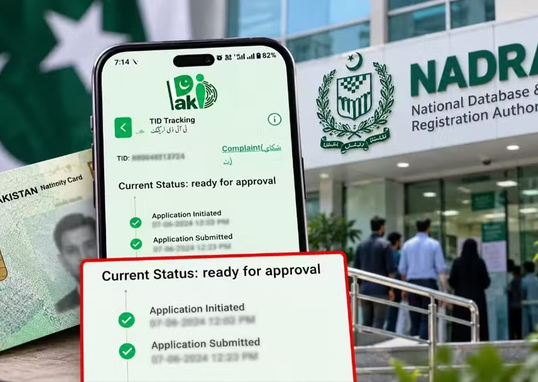
NADRA Explains ‘Ready for Approval’ Status on PakID App
The National Database and Registration Authority (NADRA) has clarified the meaning of the “Ready for Approval” status that applicants may see while...

PIA Plans to Expand Flights to Europe and the UK With Additional Aircraft
Pakistan International Airlines (PIA) is preparing to increase its flight operations to Europe and the United Kingdom as the national carrier works...

Pakistan Sees Major Shift as Digital Payments Reach 92% of Retail Transactions
Pakistan has witnessed a major transformation in the way people make payments, with digital channels accounting for 92 percent of retail payment...