
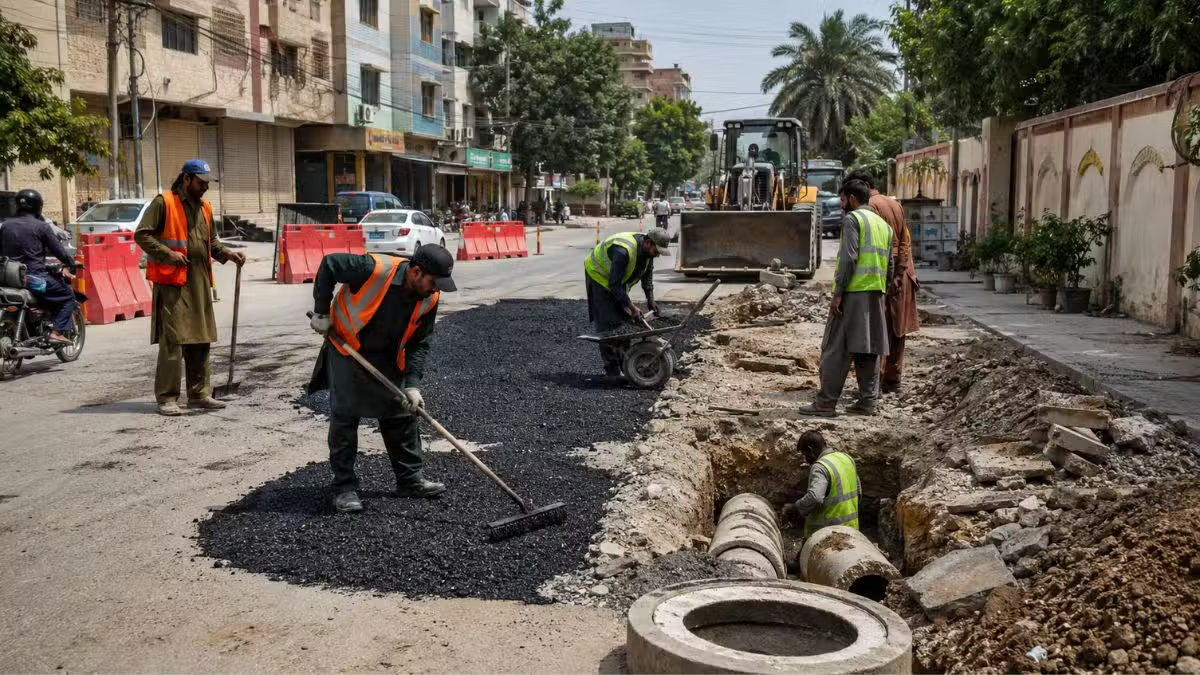
The Sindh government has directed authorities to immediately address deteriorating road conditions and long-standing sewerage issues in Gulistan-e-Jauhar, one of Karachi’s busiest residential neighborhoods. The move comes as part of renewed efforts to improve urban infrastructure and enhance public services across the city.
Chief Minister Murad Ali Shah instructed Karachi Mayor Murtaza Wahab to personally visit Gulistan-e-Jauhar and conduct a detailed assessment of the area’s infrastructure. The inspection will focus on the condition of major roads, internal streets, and drainage systems that have been causing difficulties for residents.
The directive reflects the provincial government’s commitment to resolving civic issues that have affected daily life in the locality. Damaged roads, overflowing drains, and poor sewerage infrastructure have remained key concerns for residents, particularly during the monsoon season when waterlogging disrupts traffic and increases the risk of health hazards.
Officials have been asked to identify priority areas requiring urgent attention and prepare an action plan for immediate repairs. The initiative is expected to cover both major thoroughfares and neighborhood streets, ensuring that infrastructure improvements benefit commuters as well as local residents.
Repairing the sewerage network is another major component of the government’s plan. Efficient drainage systems are considered essential for preventing flooding, reducing environmental pollution, and maintaining cleaner neighborhoods. Upgrading damaged sewerage lines can also help improve sanitation standards and reduce recurring maintenance problems.
The Sindh government’s latest directive highlights its focus on strengthening Karachi’s urban infrastructure through coordinated efforts between provincial authorities and local government institutions. By involving the Karachi mayor directly in the inspection process, the administration aims to ensure faster implementation and better monitoring of development work.
Infrastructure development has remained a key priority for Karachi, a city that faces increasing pressure from rapid urbanization, population growth, and aging public utilities. Improving roads and drainage systems not only enhances the quality of life for residents but also supports economic activity by making transportation safer and more efficient.
Residents of Gulistan-e-Jauhar have frequently raised concerns about damaged roads, potholes, and blocked sewerage lines that create inconvenience for motorists and pedestrians alike. The government’s intervention is expected to provide relief by accelerating repair work and addressing issues that have persisted for an extended period.
Urban planning experts note that timely maintenance of roads and drainage infrastructure can significantly reduce long-term repair costs while improving public safety. Regular inspections and preventive maintenance also help cities remain better prepared for heavy rainfall and seasonal weather challenges.
The provincial government has emphasized that the inspection will be followed by practical measures to restore affected infrastructure as quickly as possible. Authorities are expected to coordinate with relevant departments to ensure that repair projects are completed efficiently and with minimal disruption to residents.
As Karachi continues to expand, investments in road rehabilitation and modern sewerage systems remain essential for creating a more sustainable and livable urban environment. The latest directive for Gulistan-e-Jauhar represents another step toward improving civic facilities and addressing infrastructure challenges faced by the city’s growing population.